

Clinical Cleaning & Healthcare
Environmental Hygiene Support for Care Homes & Nursing Homes
For care and nursing homes across Kent and London
It needs to feel like home. It also needs to be ready when circumstances change. Your residents live here, families visit here and your team provides care here, so environmental hygiene cannot be treated as institutional cleaning. You need bedrooms and communal areas that stay welcoming, clear cleaning responsibilities, and extra support when routine arrangements are no longer enough.
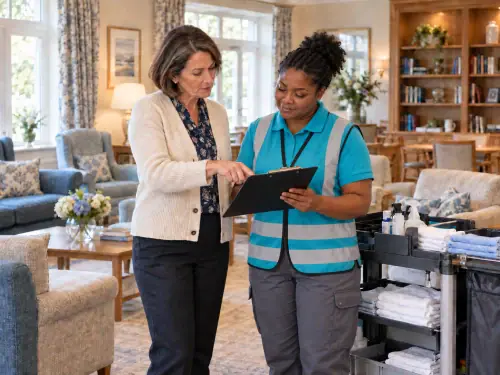
Could this be happening in your home?
Why routine housekeeping can run out of road
Most care homes have a capable housekeeping team. The pressure comes when circumstances change, and it usually arrives quickly:
- A resident becomes unwell and one bedroom needs more than its routine clean.
- Several residents develop similar symptoms and your housekeeping team is under immediate pressure.
- A body-fluid incident needs a prompt, appropriate environmental response.
- Housekeeping and care teams each assume the other is responsible for a particular surface, item or area.
- A staff absence leaves you short of capacity at exactly the wrong time.
- Your home is beautifully presented, but the system behind that appearance gives management less visibility than you would like.
Your housekeeping team may not be the problem. The system around them may need strengthening.
Where responsibility falls between teams
Clear ownership makes routine cleaning more reliable
In care and nursing homes, the gaps usually sit in the same places:
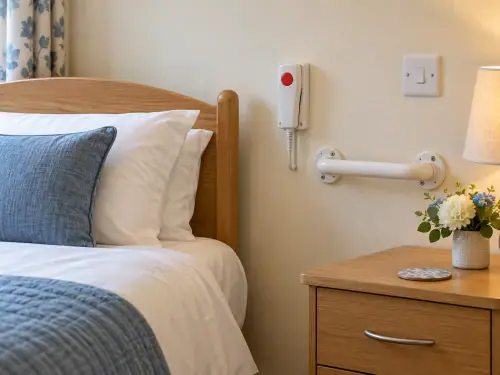
- Bedroom touch points, such as call bells, handrails, light switches and door handles, where care and housekeeping teams each assume the other has done it
- Shared resident equipment such as shower chairs, commodes and hoist slings, where it is unclear who cleans what and when
- Sluice rooms, bathrooms and en-suites after an unwell resident
- Communal lounges and dining areas that serve many residents through the day
- Evenings, weekends and staff absences, when the usual arrangement is thinner
Between-resident decontamination of care equipment stays with your care team under your own protocols. You gain a written specification stating who cleans what, how often and how it is recorded.
When an outbreak affects more than the environment
The environmental part of your response, handled properly
An outbreak does more than create extra cleaning. Residents’ routines and activities can be disrupted, visiting arrangements may change, families worry about seeing relatives, and staff come under pressure while trying to protect residents and keep care consistent. For residents who rely on familiar faces and regular family contact, that disruption has a real human cost.
That is why outbreak preparedness should not begin only after several people are unwell. Aridom Sanex can support your existing infection-control and housekeeping arrangements with additional environmental cleaning, appropriate disinfection and, where justified, specialist environmental decontamination.
Environmental decontamination alone will not end an outbreak or decide when restrictions can be lifted. Those decisions rest with your manager and infection-control lead, with advice from your local UKHSA Health Protection Team where applicable. The environmental response should simply not be the part that gets overlooked.
Enhanced steps such as automated dry fogging with hypochlorous acid (HOCl), a biocide used for environmental disinfection, support physical cleaning and disinfection rather than replacing them. They are used only in rooms with no residents or staff inside, and are agreed with you in advance.
Read more about outbreak and specialist environmental response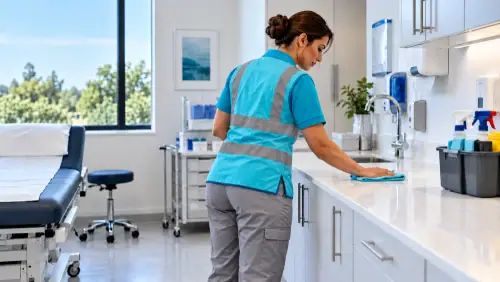
The Aridom approach
Clean → Disinfect → Enhance where required → Verify → Document
Every home is assessed before a specification is written, because a resident’s bedroom, a sluice room and a dining room do not need the same response.
- Clean. Physical removal of soil and organic matter from every agreed surface, using the right method and colour-coded equipment for each area.
- Disinfect. An appropriate disinfectant, applied at the correct concentration and contact time for the surfaces and risk involved.
- Enhance where required. Enhanced environmental decontamination for defined situations, agreed with you in advance rather than applied by default.
- Verify. Each visit is checked against the agreed specification, using products selected with reference to recognised BS EN efficacy standards for their intended use and, where agreed, further verification suited to your setting.
- Document. A record of what was done, where, when and by whom, including any issues found and the action taken.
Sometimes the right answer is additional physical cleaning. Sometimes it is cleaning followed by targeted disinfection, or a deep clean. Enhanced decontamination is for when the circumstances justify it, and sometimes a method is not appropriate for the room at all.
You gain a specification that matches each area and a clear line from risk, to action, to evidence.

Verification and contingency
Evidence you can produce, and what to expect when things change
You receive a clear record for every agreed visit: the areas covered, the tasks completed, who carried them out, the products used, and any issues found with the action taken. Safety data sheets and efficacy test information for those products are available on request. The record supports your own audits and, where your home is regulated, your inspection preparation; it does not replace them.
Contingency is planned before it is needed:
- What can be offered for absence and short-notice changes is discussed at the outset, so expectations are clear on both sides
- Where an enhanced response is appropriate, how to request it and the timings that can be offered are discussed with you in advance
- Clear communication with your registered manager or deputy on what was done and when each room is ready to use again
The aim is that you know what to expect before you need it.
Common questions: day to day
Environmental hygiene for care homes and nursing homes
Will this disrupt our residents’ routines?
Visits are agreed with your manager in advance and planned around mealtimes, activities and resident preferences. Rooms are treated when unoccupied, and any enhanced step is used only in rooms with no residents or staff inside.
Do you replace our housekeeping team?
No. The aim is to work alongside your team, define responsibilities and add extra support where routine arrangements are no longer enough.
Do you only help during an outbreak?
No. A review of your arrangements before anything happens means that, when a situation arises, your team already knows who to call and what to expect. Support also covers deep cleans and body-fluid incidents.
Can you end an outbreak?
No. Environmental cleaning and decontamination are one part of your wider infection-control response. Decisions about restrictions rest with your home and, where applicable, your local UKHSA Health Protection Team.
Do you clean resident equipment such as hoists and commodes?
Between-resident decontamination of care equipment stays with your care team under your own protocols. Your specification covers rooms, fixed surfaces and, where the manufacturer’s instructions allow and it is agreed with you, the outer surfaces of equipment.
Common questions: staff, inspection and cover
Environmental hygiene for care homes and nursing homes
Are your staff DBS checked?
Anyone attending your home holds a basic DBS check. If your home requires an enhanced check, tell us at the start and we will confirm what can be arranged.
We are CQC-registered. How does this fit with our inspection?
The specification is written around the services you provide and the areas you use, to support your own arrangements under the Health and Social Care Act 2008 Code of Practice on the prevention and control of infections and UKHSA’s infection prevention and control resource for adult social care. The records support your own audits and CQC inspection preparation; they do not replace your responsibilities as the registered provider.
Can you attend at short notice?
It depends on the situation, location and availability, and is discussed when you get in touch. Agreeing arrangements in advance helps, but availability cannot be guaranteed.
Which areas do you cover?
Care and nursing homes across Kent, including Maidstone, Tunbridge Wells, Tonbridge, Medway, Sevenoaks, Canterbury, Ashford and Dartford, and across London, including Bromley and central and south-east London.
If something has already happened, see our outbreak and specialist environmental response page.

Request a Care Home Review
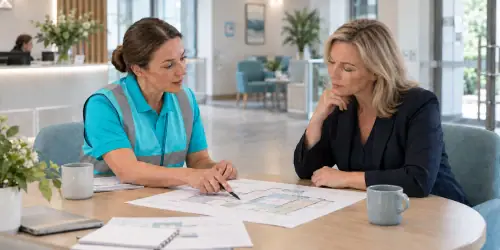
Tell us about your home and we will arrange a review of your current environmental hygiene arrangements: who cleans what, how incidents are handled today, and the records you hold. You receive a clear summary of any gaps and practical options for closing them, with no commitment to proceed.
Maidstone Innovation Centre, Gidds Pond Way, Kent Medical Campus, Maidstone, Kent ME14 5FY