

Contact Us
Can’t find the answers you need on our website? We’re here to help! Get in touch to find out more.
Tell us what you are dealing with. We assess first and recommend the right response, which is sometimes cleaning alone.
Service
Aridom Sanex responds to mould contamination in homes, social housing, commercial premises, healthcare and heritage settings across London, Kent and the South East. We combine targeted cleaning of visible growth with, where an assessment justifies it, dry fogging of the surrounding space using Paqualyte, our hypochlorous acid (HOCl) product.
Neither cleaning nor fogging deals with the cause. The moisture source still has to be found and repaired by the building owner or a contractor.
Settings we work in: homes and HMOs; offices and schools; healthcare and care settings; hospitality and leisure venues; retail and transport; dental and veterinary clinics; food-adjacent environments, including farms, greenhouses and cold stores, by assessment; and heritage and historic buildings, including archives and collections.
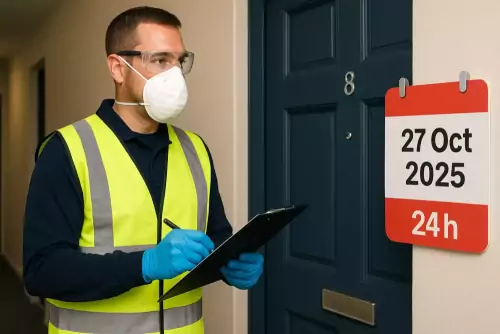
Damp and mould duties have applied since 27 October 2025. From 30 November 2026 further hazards are added, including excess cold and excess heat. For significant hazards the landlord must investigate within 10 working days, give the tenant a written summary within 3 working days of the investigation concluding, and complete safety work within 5 working days of the investigation ending. Emergency hazards must be investigated and made safe within 24 hours.
These duties sit with the landlord. We can support with an assessment of visible mould and its likely causes, documented cleaning and, where justified, dry fogging. We do not replace the landlord’s duty to investigate and repair.
Read the GOV.UK guidance on Awaab’s Law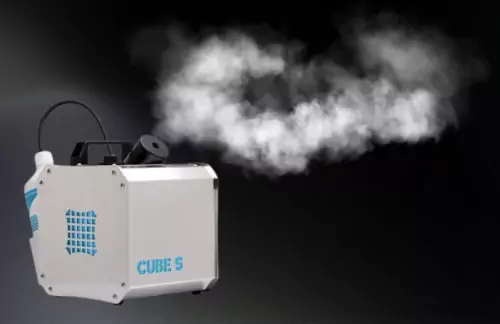
Our standard HOCl product is classified as set out in its current safety data sheet, which we supply on request. Ventilation, dosing and re-entry criteria are set for each job. We make no medical claims.
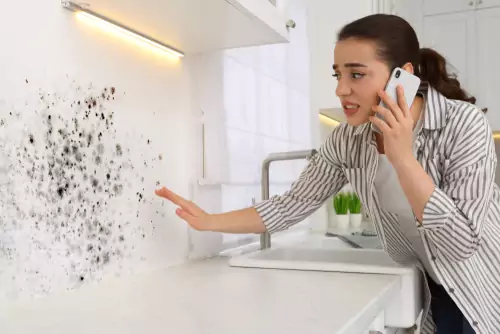
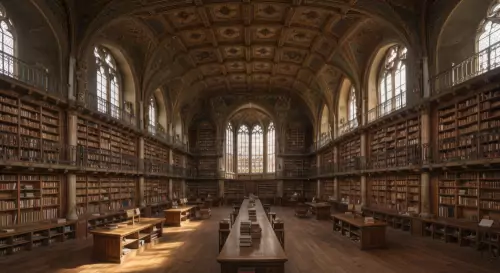
Lime plaster, timber, stone, historic paints, textiles, books and manuscripts can be damaged by wet methods and by some chemicals. We assess each site and agree the approach with you and, where appropriate, your conservator.
Collections need particular care. Treating a room is not the same as treating a collection, and conservation advice comes first. Read our guide to mould in archives and heritage collections, then request a confidential assessment.
How we approach heritage settings: dry fogging uses low volumes of liquid and does not soak surfaces. Compatibility with the specific materials in your building is assessed before any treatment, with your conservator where one is involved. Protective measures are agreed for each site.
Typical challenges: protecting irreplaceable materials; working within conservation guidelines and tight access windows; maintaining architectural authenticity and breathability.
We serve London, Kent, Surrey, Sussex and the wider South East. Other UK regions by arrangement (additional costs might apply).
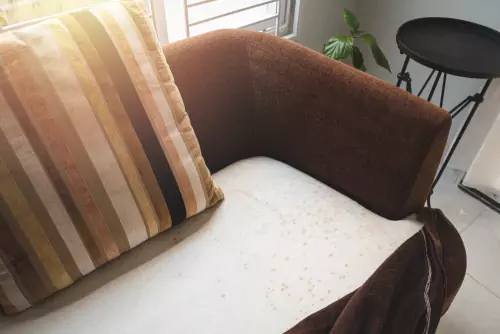
How it is used: dry fogging is normally carried out after the visible mould has been physically cleaned, and only where an assessment shows it would help.
Recurrence: fogging does not stop mould returning. Whether it returns depends on whether the moisture, ventilation or building problem has been resolved. We record what we find and make recommendations to the building owner.
Maintenance fogging: where regular fogging is appropriate, for example in a controlled environment, we can agree a schedule after assessment. It supports routine cleaning. It does not replace cleaning and does not remove the cause of contamination.
Request an assessment
What to expect: we do not claim total eradication, because spores exist in outdoor air. We record the visible condition before and after, and advise on the conditions that allow mould to return. The building repairs that stop the damp are for your contractor.

We cannot remove all mould from any environment, because spores are present in outdoor air. We do not offer guarantees of elimination or of non-recurrence.
We can treat the contamination within an agreed scope, document the work, and tell you what in the building is likely to be driving the problem.
We do not carry out air sampling. Where it would help answer a defined question, an independent laboratory can.
Heritage building enquiry
Contact Us
Can’t find the answers you need on our website? We’re here to help! Get in touch to find out more.