

Clinical Cleaning & Healthcare
Outbreak & Specialist Environmental Response
For care homes, clinics, schools and other settings across Kent and London
An outbreak affects more than a building. It can disrupt residents’ contact with family, leave parents unsure about sending children back, take rooms out of use and put your team under pressure. While you manage people, communication and continuity, the environmental response still has to happen.
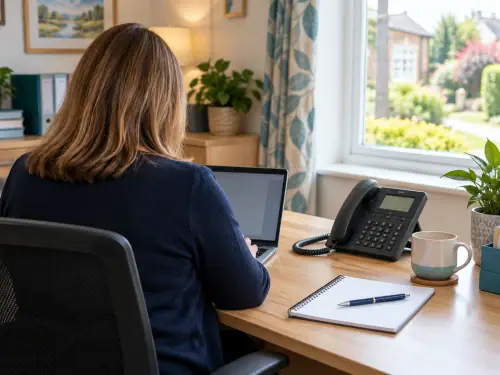
Is this happening now?
Routine cleaning is designed for routine circumstances
When an outbreak, contamination incident or unexpected situation puts extra pressure on your team, specialist environmental support can help. Does any of this sound familiar?
- Several people have similar symptoms.
- Rooms or areas need more than routine cleaning or decontamination.
- Your team is under pressure.
- Normal activities or visiting arrangements have been disrupted.
- Residents, patients, parents or staff need reassurance.
- A contamination incident has occurred.
- Your usual cleaning provision is unexpectedly unavailable.
- You are not sure what environmental response is appropriate.
You do not need to know which treatment you need before getting in touch. Tell us what has happened.
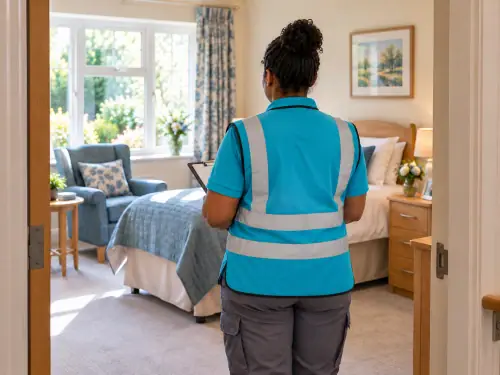
The response should fit the incident
Assessment comes before equipment
Not every incident needs enhanced decontamination.
Sometimes the right response is additional physical cleaning. Sometimes it is cleaning followed by targeted disinfection, or a deep or terminal clean. In the right circumstances, enhanced environmental decontamination can add a further control. And sometimes a proposed method is not appropriate for the environment at all.
That is why the starting point is a conversation about what happened, where, and what the space is used for, not a piece of kit. The method is chosen after that, and recorded.
The Aridom approach
Clean → Disinfect → Enhance where required → Verify → Document
Every affected area is assessed before anything is specified, because a bedroom, a classroom and a treatment room do not need the same response.
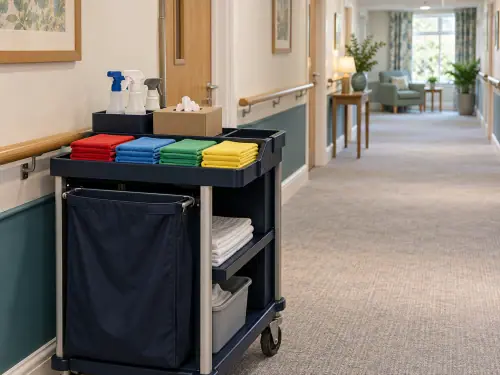
- Clean. Physical removal of soil and organic matter from every agreed surface, using the right method and colour-coded equipment for each area.
- Disinfect. An appropriate disinfectant, applied at the correct concentration and contact time for the surfaces and risk involved.
- Enhance where required. Enhanced environmental decontamination for defined situations, agreed with you in advance rather than applied by default.
- Verify. Each visit is checked against the agreed specification, using products selected with reference to recognised BS EN efficacy standards for their intended use and, where agreed, further verification suited to your setting.
- Document. A record of what was done, where, when and by whom, including any issues found and the action taken.
You gain a response that matches the incident and a clear line from risk, to action, to evidence.
What environmental response can and cannot do
One part of a wider response
Environmental cleaning and decontamination do not end an outbreak by themselves, and they do not decide when restrictions can be lifted. Those decisions rest with your infection-control lead or manager and, where applicable, your local UKHSA Health Protection Team or public health advice. What the environmental response can do is make sure that part of your plan is carried out properly and recorded.
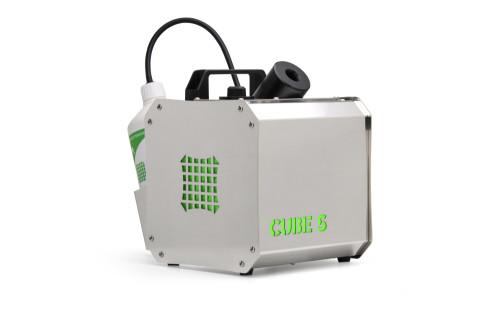
Automated dry fogging with hypochlorous acid (HOCl), a biocide used for environmental disinfection, supports physical cleaning and disinfection rather than replacing them. It is used only in rooms with no people inside, and suitability, downtime and compatibility are agreed with you in advance.
Your contingency before you need it
Know who to call and what to expect
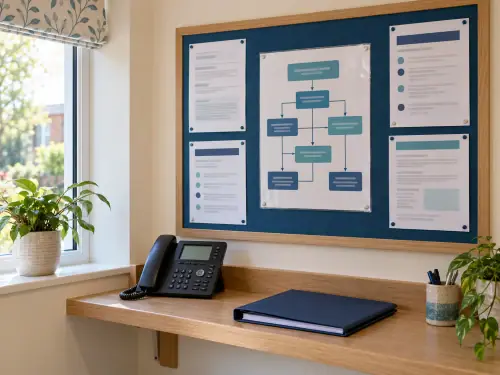
You do not have to wait for an incident to get in touch. We can talk through your existing environmental response arrangements in advance, so that when something unusual happens your team already knows who to call, what information is needed and what the first steps would be.
That can matter where you could not easily absorb several affected rooms, an unexpected staffing gap or an urgent need for extra environmental support. Availability and timing depend on the situation and location, and are discussed openly rather than assumed.
Verification and contingency
Evidence you can produce, and what to expect when things change
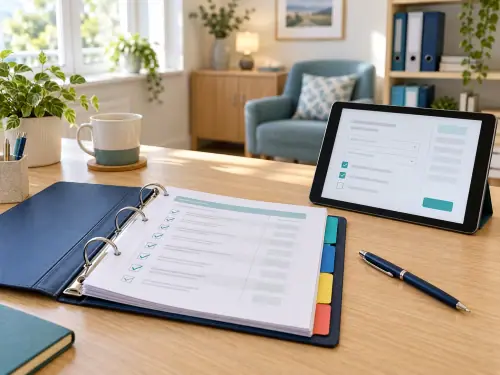
You receive a clear record for every agreed visit: the areas covered, the tasks completed, who carried them out, the products used, and any issues found with the action taken. Safety data sheets and efficacy test information for those products are available on request. The record supports your own audits and, where your setting is regulated, your inspection preparation; it does not replace them.
Contingency is planned before it is needed:
- What can be offered for absence and short-notice changes is discussed at the outset, so you know what to expect
- Where an enhanced response is appropriate, how to request it and the timings that can be offered are discussed with you in advance
- Clear communication with your manager, infection-control lead or facilities lead on what was done and when each room is ready to use again
The aim is that you know what to expect before you need it.
Common questions
Outbreak and specialist environmental response
Do we need a declared outbreak before contacting you?
No. Declaring an outbreak is a decision for your infection-control lead or Health Protection Team. If something has happened and you are unsure what the environment needs, you can talk to us first.
Will fogging stop an outbreak spreading?
Environmental decontamination is one control among several and does not replace cleaning, hand hygiene, isolation arrangements or advice from your Health Protection Team. Where fogging is appropriate, it supports the cleaning and disinfection already done.
Do you replace our cleaning team?
No. Support sits alongside your team and is agreed with you, whether that is extra cleaning, a deep clean or a specialist step.
Can you attend at short notice?
It depends on the situation, location and availability, and is discussed when you get in touch. Agreeing arrangements in advance helps, but availability cannot be guaranteed.
Which settings do you work in?
Care and nursing homes, clinics and healthcare settings, and other premises where an incident has taken rooms out of use. Each is assessed individually.
Which areas do you cover?
Across Kent, including Maidstone, Tunbridge Wells, Tonbridge, Medway, Sevenoaks, Canterbury, Ashford and Dartford, and across London, including Bromley and central and south-east London.

Tell Us What Has Happened
Tell us what has happened, where, and what environment is affected. You do not need to diagnose the solution. If you are planning ahead rather than responding to an incident, say so and we will talk through your response arrangements with you.
Maidstone Innovation Centre, Gidds Pond Way, Kent Medical Campus, Maidstone, Kent ME14 5FY