

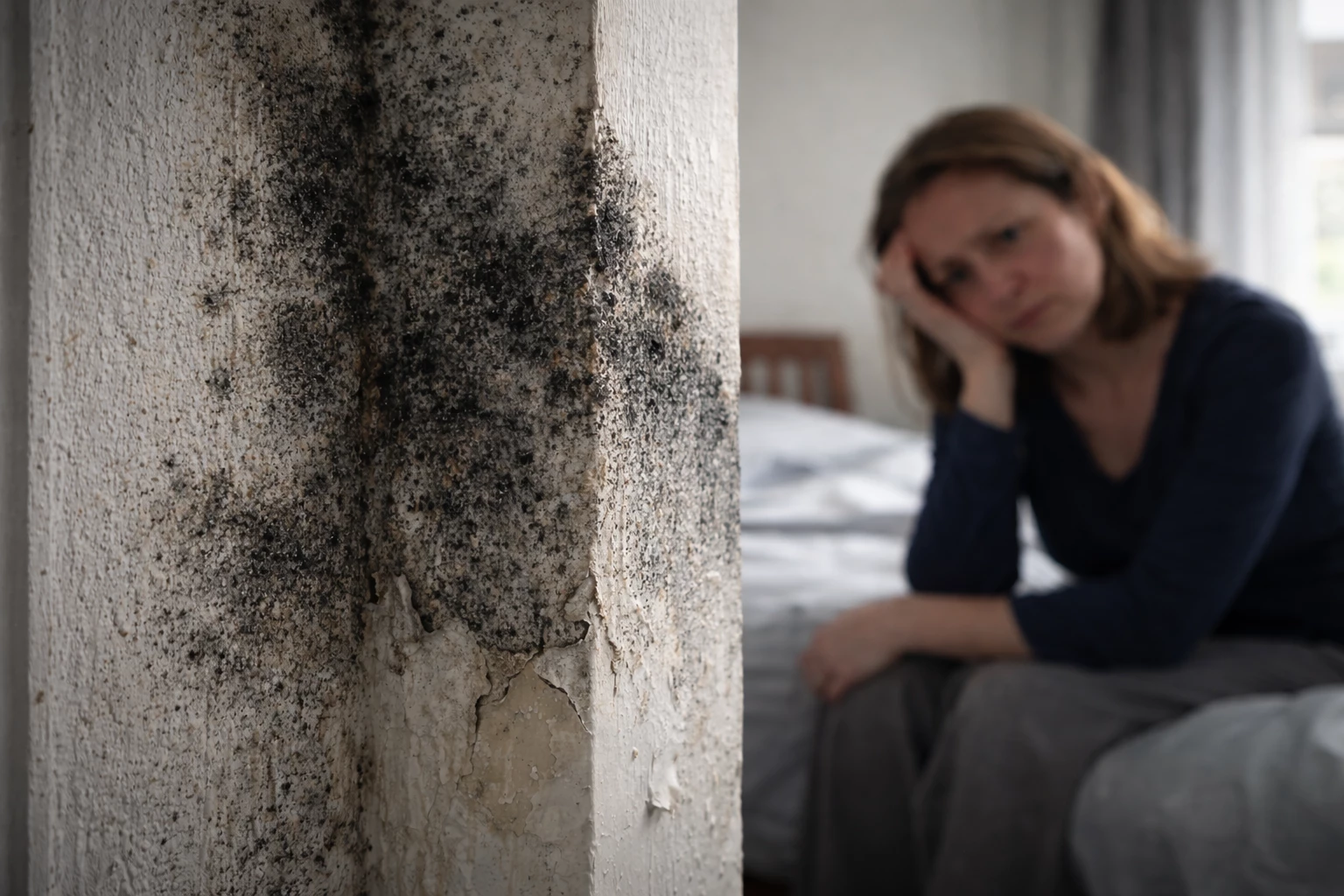
Black mould in the home is more than an unsightly nuisance. For many households across the UK, it’s a persistent problem that raises understandable concerns about health, safety, and property damage. If you’ve discovered dark patches creeping along walls, ceilings, or around windows, you’re not alone, and you’re right to take it seriously.
This article explains why black mould matters, outlines seven potential health risks, and shows how professional, ethical mould management can reduce risk and restore a healthier indoor environment.
Why black mould causes so much concern
Mould is a type of fungus that thrives in damp, poorly ventilated environments. While many mould species exist indoors, black mould (a term commonly used for dark-pigmented moulds) attracts particular attention because it often appears where moisture problems are long-standing.
Bathrooms, kitchens, bedrooms with condensation, basements, and properties with leaks or poor insulation are especially vulnerable. Over time, unmanaged mould growth can affect both building fabric and occupant wellbeing.
7 serious health risks linked to black mould exposure
It’s important to be clear and responsible: this article does not offer medical advice. If you are experiencing symptoms, always consult a qualified healthcare professional. That said, research and building-health evidence suggest mould exposure can be linked to the following issues.
1. Allergic reactions
Many people are sensitive to mould spores. Exposure can trigger sneezing, itchy eyes, runny noses, and skin irritation, particularly in children.
2. Worsening asthma symptoms
Mould spores and fragments can irritate airways. For individuals with asthma, exposure may increase wheezing, coughing, or reliance on inhalers.
3. Respiratory irritation
Even in people without diagnosed conditions, prolonged exposure to mould can be associated with throat irritation, persistent coughing, and shortness of breath.
4. Headaches and fatigue
Poor indoor air quality, often associated with damp and mould, is a recognised contributor to Sick Building Syndrome, where occupants experience headaches, tiredness, and difficulty concentrating that improve when leaving the building.
5. Skin conditions
Direct contact with mouldy surfaces or contaminated dust can aggravate eczema or cause rashes in susceptible individuals.
6. Increased vulnerability in high-risk groups
Elderly occupants, infants, and people with compromised immune systems may be more affected by indoor mould exposure, making mould prevention particularly important in care settings.
7. Psychological stress
Living with visible mould can cause ongoing anxiety, sleep disruption, and stress, especially when occupants feel the issue isn’t being taken seriously or keeps returning after repeated cleaning.
What exactly is mould, and why does it keep coming back?
Mould grows; it doesn’t “move”. It spreads by extending microscopic structures into damp materials such as plaster, wood, and fabrics. While mould cleaning may remove what you can see, the underlying growth often remains if moisture isn’t addressed.
This is why DIY solutions frequently fail and why professional mould removal focuses on more than surface appearance.
Key points to understand:
- Mould spores are present in outdoor air all the time
- Indoors, small amounts are normal
- Problems arise when moisture allows mould to grow and colonise
Effective mould remediation therefore means controlling both the mould and the conditions that allow it to thrive.
Why black mould removal needs a professional approach
Scrubbing walls with bleach, vinegar, or off-the-shelf sprays may seem effective at first, but these approaches usually treat appearance, not the problem itself. On porous materials such as plaster, paint, and sealants, mould grows beneath the surface. Cleaning only what you can see leaves the root structure (mycelium) intact, allowing mould to return quickly.
Aggressive scrubbing can also release large numbers of spores into the air, increasing occupant exposure and spreading contamination to other rooms. Bleach, in particular, often whitens mould without killing it fully, while the water content can actually encourage regrowth. Vinegar, although mildly acidic, has limited penetration and inconsistent effectiveness across mould species.
This is where experienced mould specialists make a critical difference.
A professional approach focuses on:
- Reducing airborne and surface mould safely, without dispersing spores
- Preventing cross-contamination during treatment and cleaning
- Identifying moisture sources such as condensation, leaks, or cold surfaces
- Implementing long-term mould management, rather than cosmetic fixes
By addressing both the mould and the conditions that allow it to grow, professional mould treatment delivers measurable risk reduction, not short-lived visual improvement.
When should you seek professional mould removal?
You should consider professional mould removal if:
- Mould keeps returning after cleaning
- Large areas are affected
- There’s a musty odour even without visible growth
- Occupants are experiencing ongoing symptoms
- The property houses vulnerable individuals
Early intervention can prevent more extensive damage and reduce long-term risk.
Take action before mould takes control
Black mould is not just a cosmetic issue, and ignoring it rarely makes it go away. The good news is that with the right expertise, it can be brought under control.
If you’re concerned about black mould in your home or workplace, speaking with trusted mould specialists is a sensible next step.
Contact Aridom Sanex today to discuss professional mould removal, tailored mould treatment, and long-term mould management solutions designed around your property and your needs.
A healthier indoor environment starts with informed action, not quick fixes.