

Commercial cleaning and facilities management
Contractors and facilities teams can review their product range, application procedures, handling and purchasing. The aim is appropriate improvement without lowering the standard each client requires.
By Anca Haralambie, Founder and Director, Aridom Sanex.
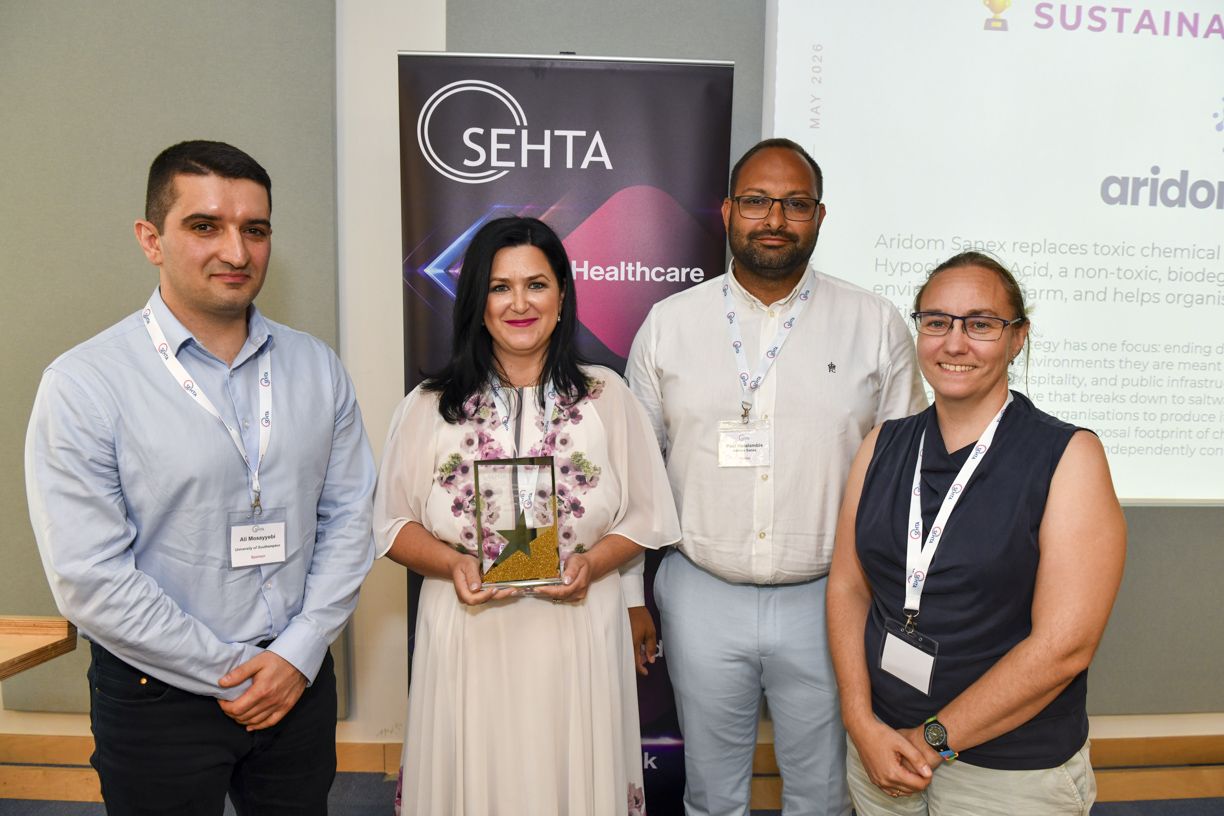
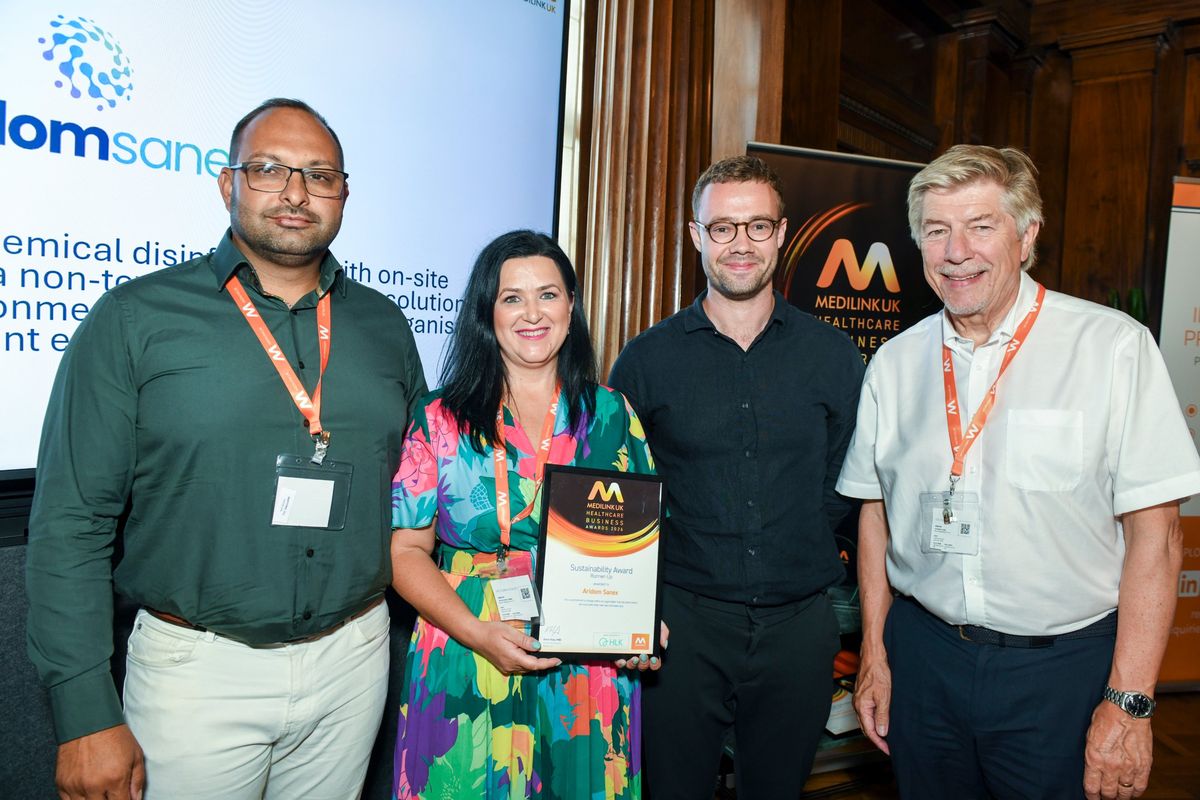
Aridom Sanex was named winner of the Sustainability Award at the SEHTA Healthcare Business Awards, and runner-up in the Sustainability category at the Medilink UK National Healthcare Business Awards on 9 July 2026.
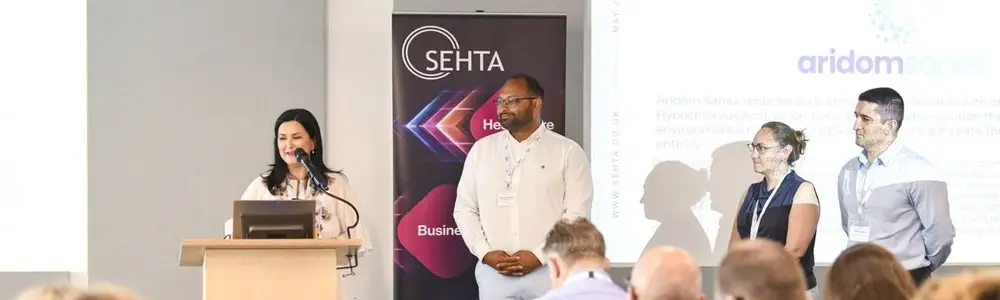
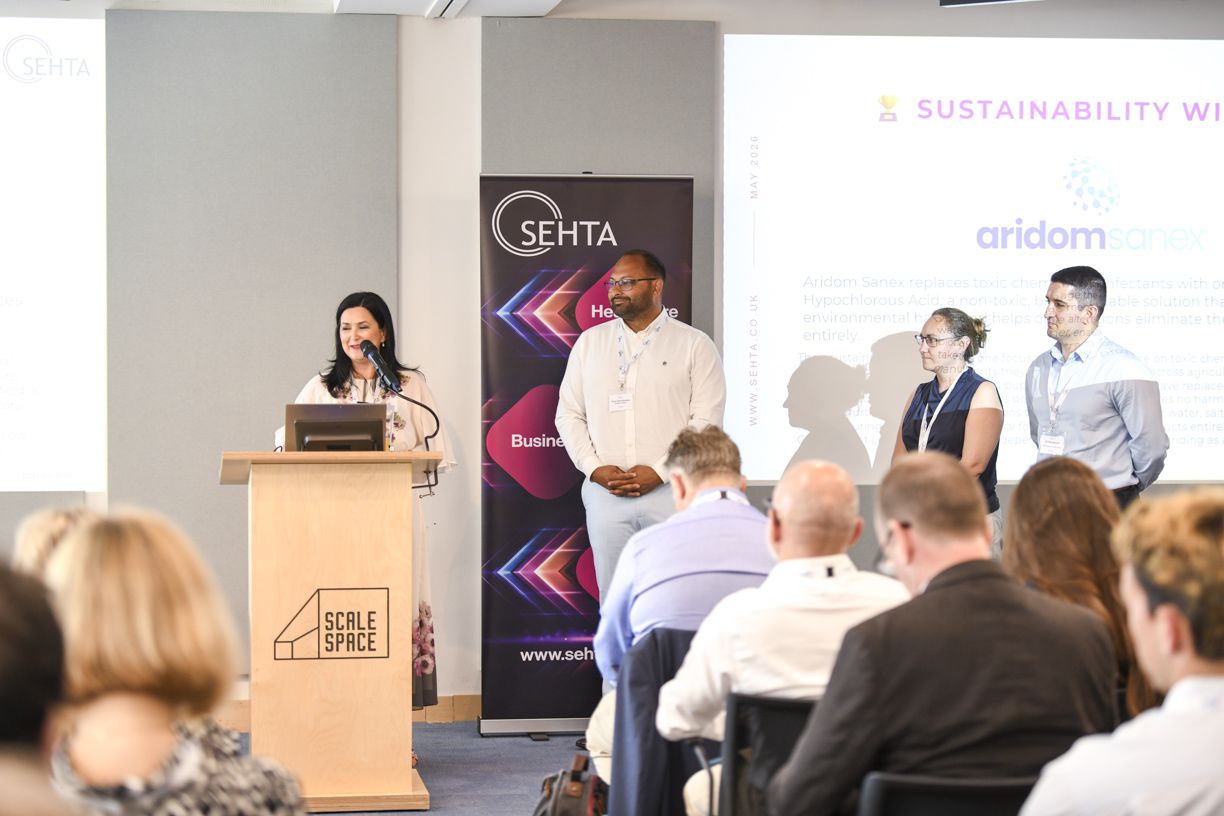
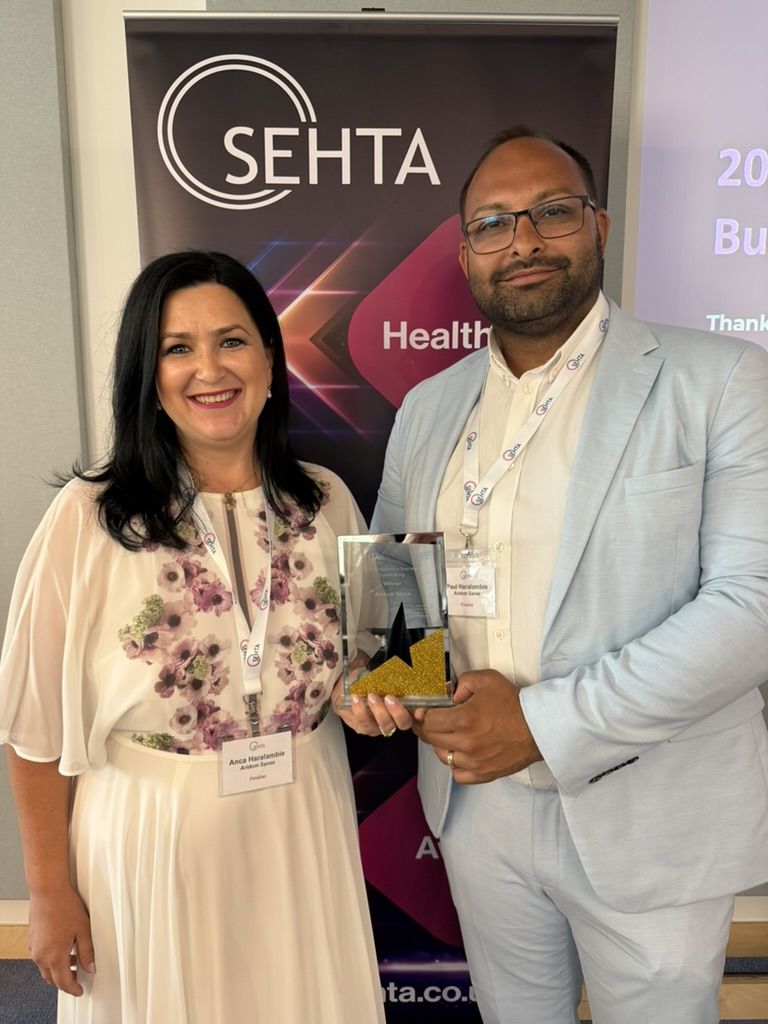
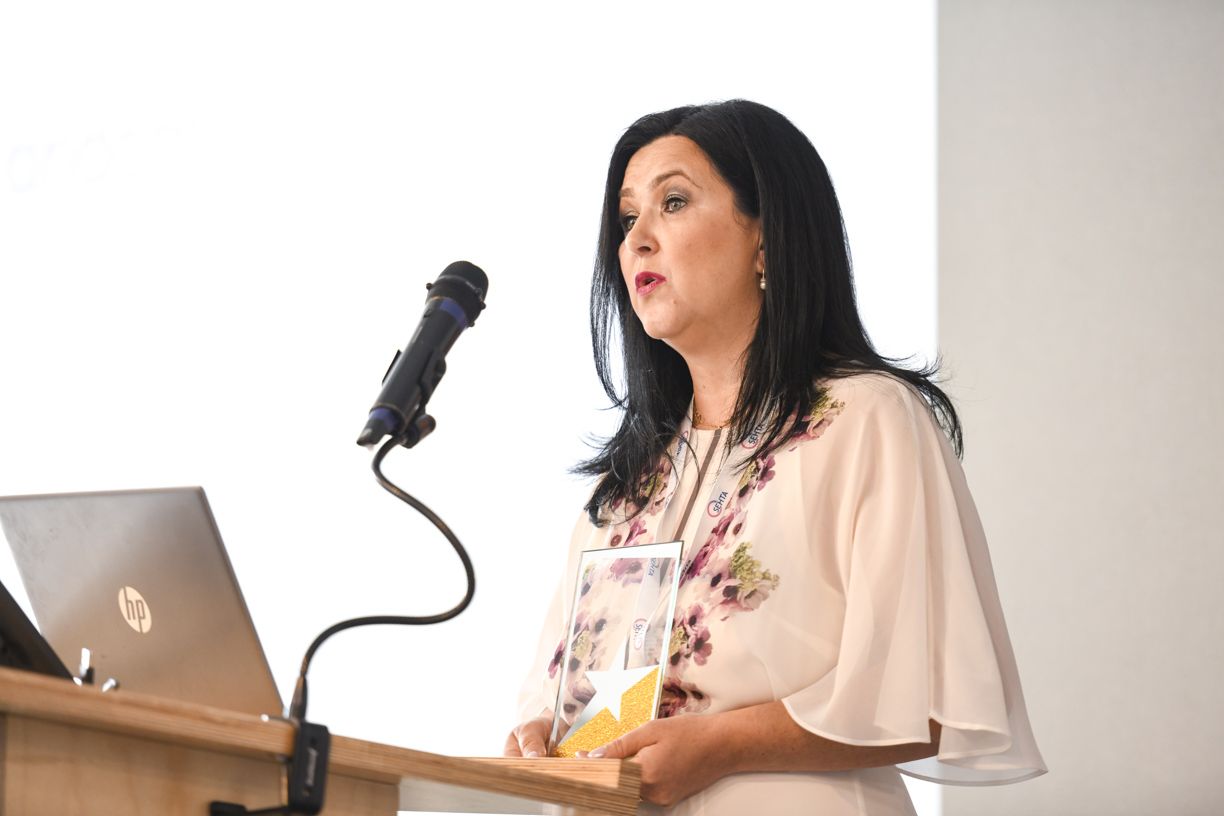
SEHTA announced Aridom Sanex as winner of the Sustainability Award at the SEHTA Healthcare Business Awards. SEHTA said its winners would be entered for shortlisting at the Medilink UK national awards.
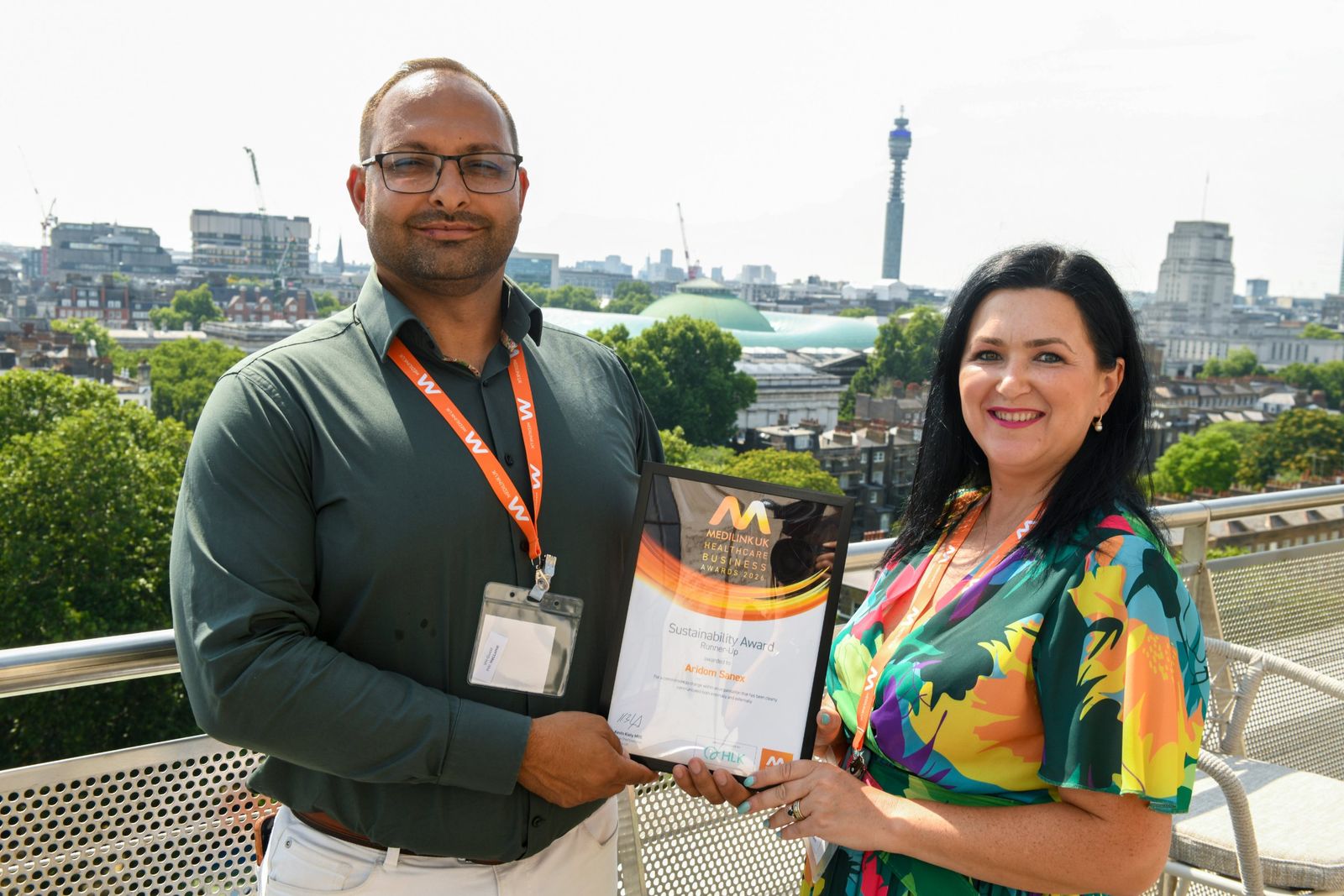
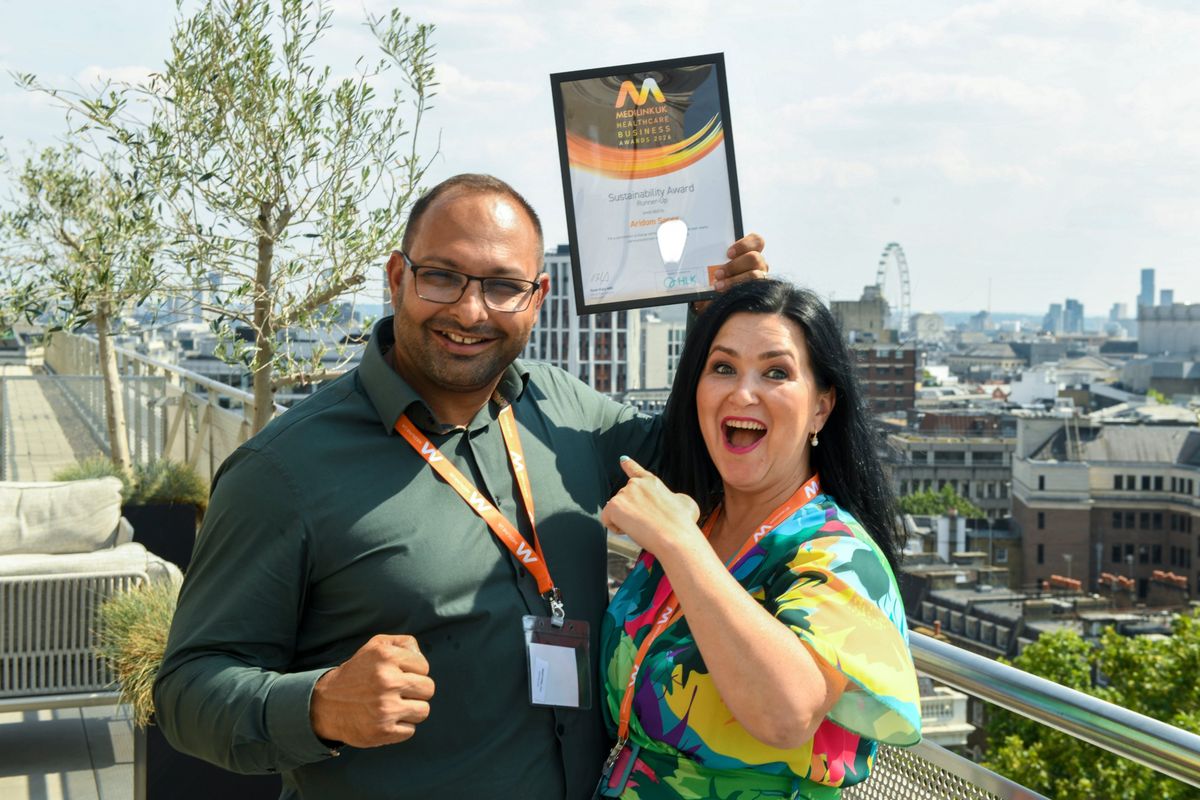
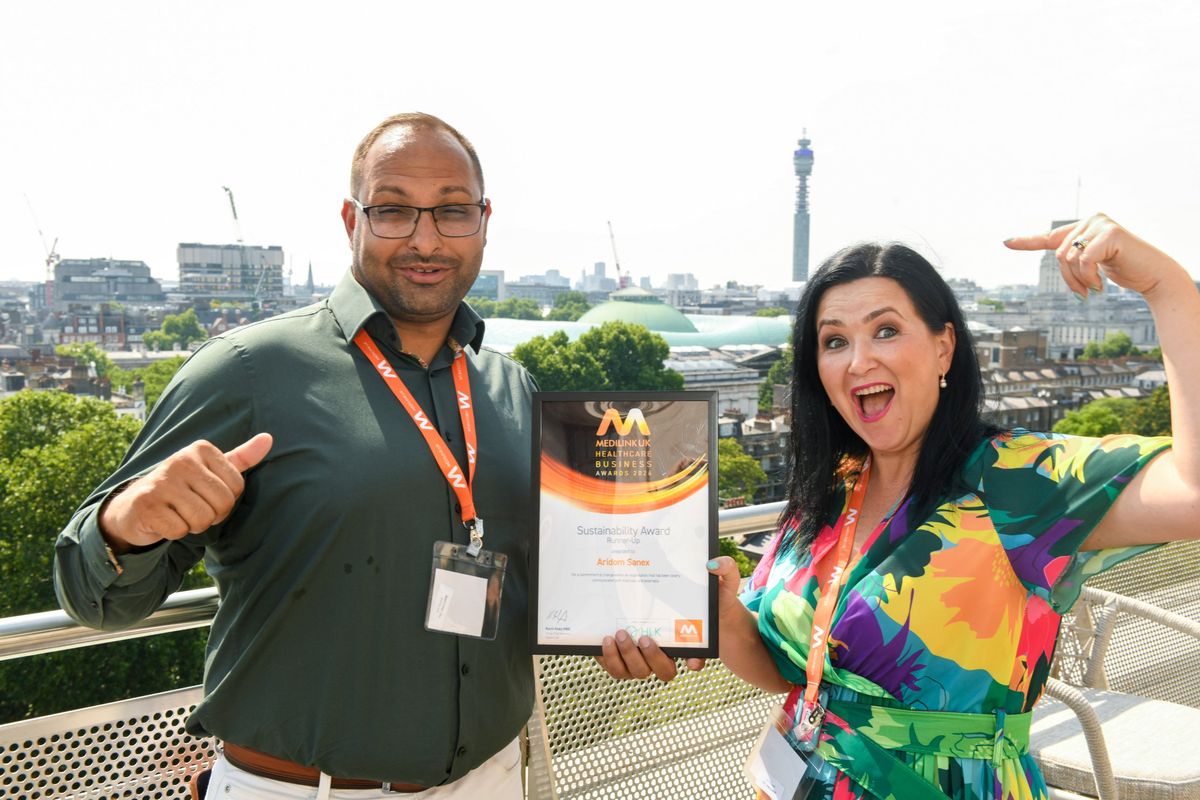
At the Medilink UK National Healthcare Business Awards on 9 July 2026, Aridom Sanex was named runner-up in the Sustainability category. The certificate cites “a commitment to change within an organisation that has been clearly communicated both internally and externally.” The two results are different: a win at SEHTA, and runner-up at national level.
Anca Haralambie, Founder and Director of Aridom Sanex Ltd, said:
“This award helps people listen, and that is one of the most important things it can do.
For a long time, we have been working to challenge the assumption that effective decontamination has to rely on higher-hazard chemicals, and recognition like this creates the space for those conversations to happen.
We are proud to see that approach acknowledged at a national level, particularly as the importance of environmental sustainability and healthier indoor spaces continues to grow.
Ultimately, we hope this recognition encourages more people to consider that protecting both human health and the environment can go hand in hand.”
Labels such as green, environmentally friendly or chemical-free do not show whether a product or process is more sustainable. A fair assessment looks at the whole hygiene process and measures what it can.
The factors that can be measured include:
Occupational safety is a separate question. Handling, storage and exposure matter, but they are not environmental impact measures, and one should not stand in for the other. A hazard classification on a safety data sheet is not a lifecycle assessment either.
Measured outcomes and potential benefits also need to be kept apart. A change may reduce deliveries or consumption in principle, but that counts only once it has been measured against a baseline at your own site. Using fewer products does not by itself prove lower cost or lower carbon.
The sensible starting point is what the organisation needs to achieve. Whether any product or process should change comes after that.
Hypochlorous acid (HOCl), a biocide used for environmental disinfection, is a chlorine-based chemistry. Some formulations are used to disinfect surfaces and, with suitable equipment, spaces. It is not chemical-free, universally harmless or suitable for every surface and situation, and we would not describe it that way.
Whether an HOCl product suits a particular application depends on:
Cleaning and disinfection are different jobs. Cleaning removes soil and contamination. Disinfection reduces specified microorganisms under defined conditions, and works best on a surface that has been cleaned. Both are often needed.
Biocidal products supplied in Great Britain must meet the Great Britain Biocidal Products Regulation. Depending on the product and its active substance, that may mean an authorisation, or supply under transitional arrangements while the active substance is under review. Products in which the active substance is generated in situ can have different requirements. Which route applies to a given product, and what claims are permitted, should be confirmed from current HSE guidance and the supplier’s documentation before anything changes. We would want that confirmation from any supplier, ourselves included.
Aridom Sanex supplies automated dry fogging equipment for defined environmental decontamination applications. It is an application-specific process, not a general alternative to cleaning.
Before fogging is considered, the application needs assessing: the room and its contents, equipment, ventilation, the product and concentration, controls for people and animals, treatment validation and re-entry arrangements. Fogging supports physical cleaning and routine infection prevention and control (IPC) procedures. It does not replace them.
You can read more about our automated dry fogging machines and our decontamination services.
Healthcare facilities have to maintain environmental cleanliness while managing cost, staff safety, sustainability objectives and infection prevention requirements. A reception area, a consultation room and a treatment room do not automatically need the same products or processes.
Before changing anything, we would ask five questions.
In healthcare settings, changes should be agreed through the facility's own management and infection prevention governance. Our clinical cleaning and healthcare service is built around the same principle, and our guide for managers explains what to ask when comparing clinical cleaning providers.
The underlying questions apply in other settings too: understand the problem, establish the required standard, then evaluate the most suitable approach.
Contractors and facilities teams can review their product range, application procedures, handling and purchasing. The aim is appropriate improvement without lowering the standard each client requires.
Farms, packhouses and cold stores have surfaces, equipment and facilities to keep hygienic. Any alternative treatment must be assessed for the application, operating conditions, regulatory requirements and supporting evidence. Environmental hygiene is not plant protection or food-contact use unless a product is specifically suitable and authorised for those purposes.
Property managers may need an environmental hygiene review, specialist decontamination or mould remediation. Treatment alone is not enough for mould: the moisture source and the cause of recurrence have to be found and dealt with.
Archives and heritage buildings need extra care around collections, materials and environmental controls. Decontamination does not replace specialist conservation or management of the underlying conditions. Our guide to mould in archives and heritage collections explains where cleaning alone is not enough.
Pick the situation closest to yours. Each route sets out what to examine, what evidence to gather and a sensible next step, before any contact is needed.
Choose your situation
Select a situation above to see the guide.
Agree any change through your own IPC governance first. Fogging, where it is considered at all, is an adjunct after a site assessment and never a replacement for physical cleaning.
Tell us about your facility and what you would like to review.
Discuss your requirementsIdentify where a specification allows review. Any alternative has to meet the same performance requirement as the product it replaces.
Describe your service model and where you see room for review.
Discuss your requirementsCompare any alternative against the same requirement rather than a general reputation. Not every disinfectant needs replacing, and evidence for one formulation does not transfer automatically to another.
Ask for technical information on a specific application.
Request technical informationDecide which measures would show that a change worked before changing anything. We do not assume savings: any reduction in cost, waste or carbon has to be shown against your own baseline.
We can start by discussing how a baseline could be measured.
Discuss your requirementsAsk the supplier for the source behind each claim. Terms such as green, natural or chemical-free are not evidence.
Ask us what evidence exists for a specific claim.
Request technical informationAssessment comes first, then targeted cleaning and, where justified, dry fogging. Dry fogging does not stop mould returning, and treating a room is not the same as treating a collection.
Tell us what you are dealing with and we will assess first.
Discuss your requirementsThis guide is general orientation. It does not assess whether a product or process suits your site, and it gives no score or product recommendation. Suitability needs a proper assessment of the application, supporting evidence, authorisation status and manufacturer instructions.
Both results reinforce a responsibility: to keep conversations about sustainability grounded in technical evidence, appropriate product use and realistic operating requirements.
Not every product needs replacing, and not every facility needs specialist decontamination. The aim is to find where a change is justified and where existing arrangements remain appropriate.
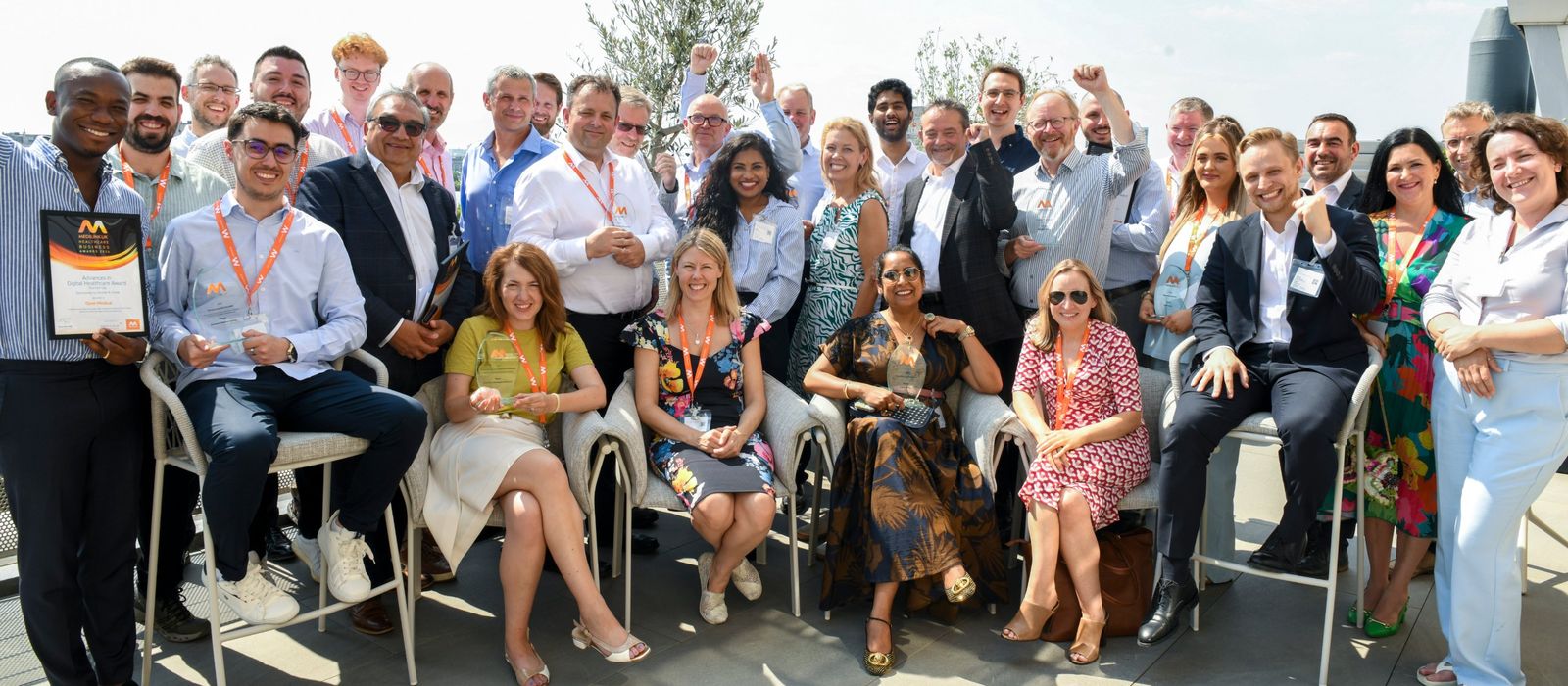
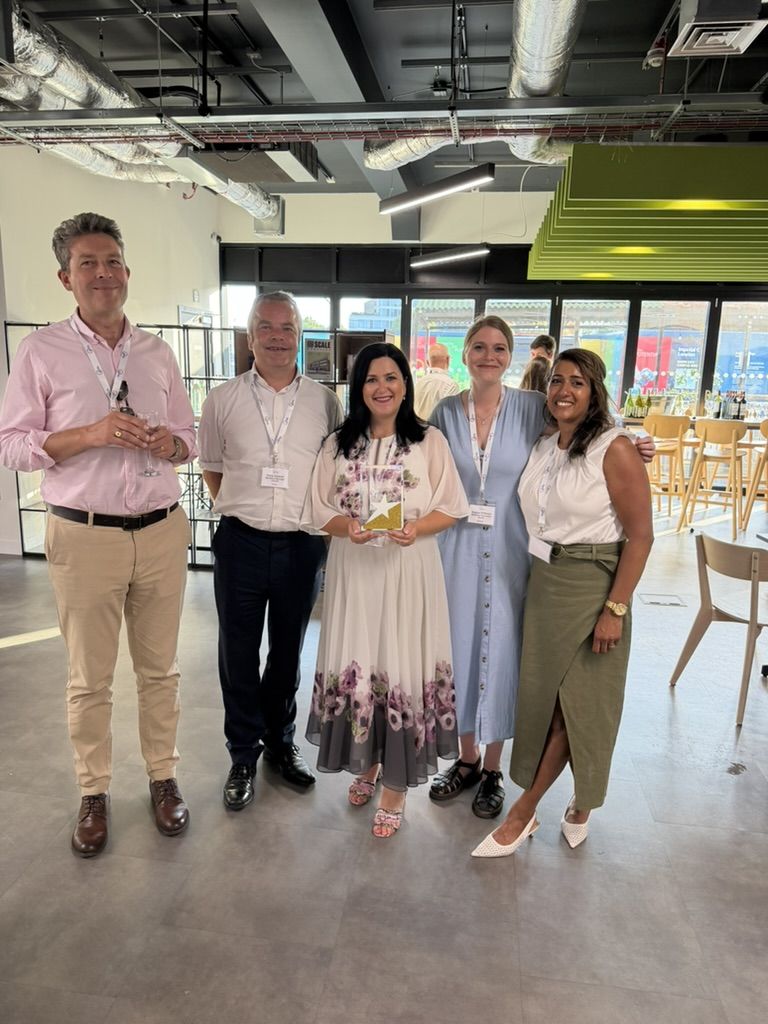
Awards evenings are as much about the people in the room as the trophies. These photographs are from the SEHTA and Medilink UK events, where we were glad to celebrate with other winners and finalists and with the people we met along the way. Thank you to SEHTA and Medilink UK for hosting both occasions.
If you are reviewing cleaning products, disinfection procedures, environmental decontamination or sustainability objectives, a conversation is a sensible place to start.
Tell us about your facility, how you clean and disinfect now, and what you would like to improve. We will say plainly whether a review is worth doing and what it would involve. Based in Maidstone, Kent, we support organisations across London and the South East, and consider projects elsewhere in the UK by arrangement.
Discuss your requirements Request technical information
Telephone 01622 395534 or email info@aridomsanex.co.uk
Published by Aridom Sanex Ltd, Maidstone, Kent. Author: Anca Haralambie, Founder and Director. This article is general information. Product and technology suitability depends on the specific application, supporting evidence, applicable authorisations and manufacturer instructions.